
Once someone accepts that they are a business owner, the next step is learning how to actually operate like one.
This is where many creators, freelancers, and entrepreneurs either grow or stay stuck.
The difference between people who remain “self-employed” and those who build sustainable businesses is often not talent; it is an operational mindset. The moment someone begins making decisions with long-term strategy instead of short-term survival, everything changes: pricing, branding, time management, partnerships, and financial growth.
BUSINESS OWNERSHIP IS NOT ONE-SIZE-FITS-ALL
Not every business owner is trying to build a startup or scale a global company. Some want to grow large teams and scale rapidly. Others prefer staying solopreneurs. Some pursue funding and investors, while others prioritize independence and flexibility. None of these paths is wrong.
Success is not one fixed destination. It evolves. At one stage, success may mean earning the first $1,000. Later, it may mean hiring a team, protecting intellectual property, or building long-term wealth.
The key is staying committed to growth while allowing your definition of success to evolve with you.
What matters most is intentionality. A six-figure solo creative with strong systems, protected intellectual property, recurring clients, and financial stability may be operating far more successfully than a larger company with unstable foundations. Business ownership is not measured solely by visibility or scale, it is measured by sustainability, leverage, and control over your direction.
Many entrepreneurs fail because they build businesses based on external expectations rather than personal goals. The strongest businesses are often built by people who clearly understand the lifestyle, freedom, income, and impact they actually want to create.
CREATORS ARE BUSINESS OWNERS TOO
One of the most overlooked truths in today’s digital world is that creators are entrepreneurs. Content creators, influencers, designers, performers, and artists are no longer simply producing content; they are building businesses. However, many hesitate to view themselves this way, and that mindset gap can limit growth.
When creators begin thinking like business owners, their decisions begin to change. They start formalizing their brand, structuring their income streams, negotiating stronger partnerships, and building systems instead of relying solely on spontaneity. For example, a YouTuber who chooses to treat their channel as a business can move beyond ad revenue and begin building a scalable career through partnerships, products, and long-term strategy.
PROTECTING THE BUSINESS YOU BUILD
Growth is only one part of becoming a business owner. Protection is the other. Many business owners focus only on income, but they tend to overlook legal and structural protection.
Contracts, trademarks, copyrights, and proper business structures are not optional extras, they are essential tools for sustainability. Without protection, business owners risk exposing both their business and personal assets.
Building a business is not only about earning money. It is also about preserving what you build.
The creator economy has fundamentally changed modern entrepreneurship. A creator is no longer just an entertainer or online personality; they are often simultaneously functioning as a marketer, brand strategist, producer, salesperson, and media company. Their audience is an asset. Their content is intellectual property. Their platform is infrastructure.
Creators who fail to recognize this often remain trapped in inconsistent income cycles, constantly chasing views instead of building long-term business equity. Meanwhile, creators who operate strategically begin developing multiple revenue channels such as licensing, digital products, memberships, consulting, speaking opportunities, affiliate partnerships, and ownership-based ventures.
The shift from “I make content” to “I own a media business” is often the turning point that separates temporary visibility from long-term career longevity.
CONCLUDING THOUGHTS AND PRO TIP
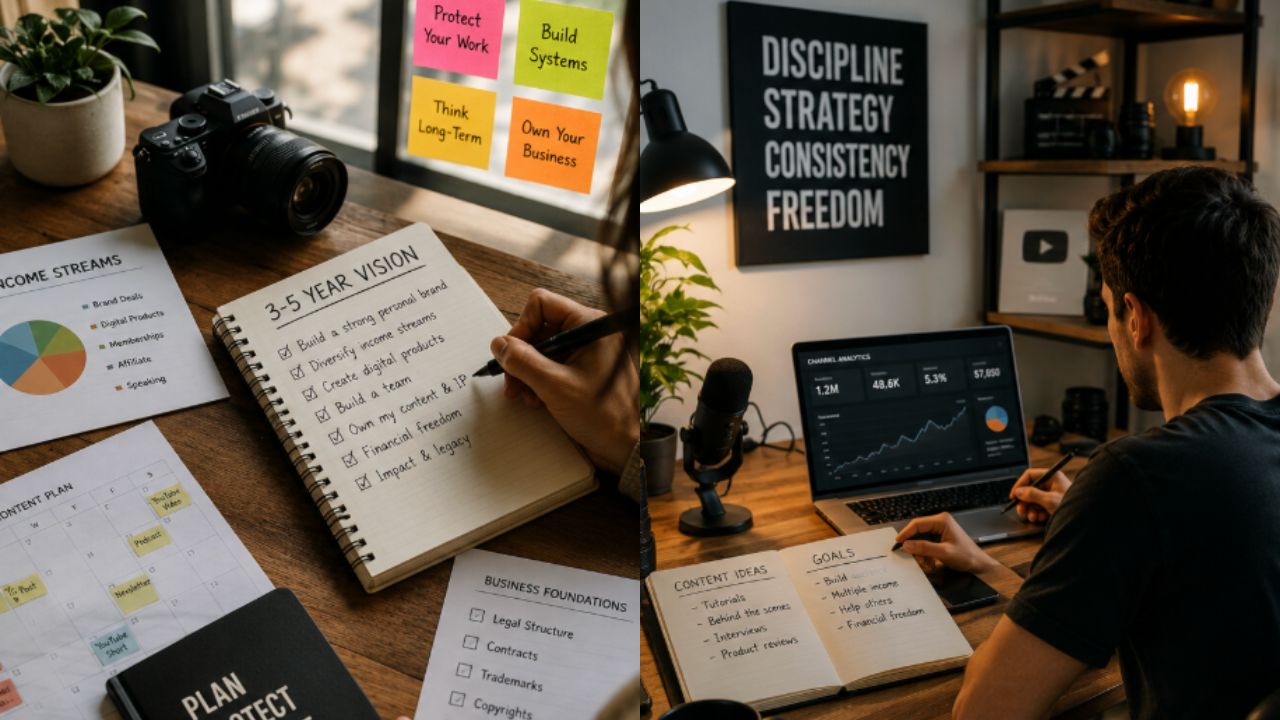
Start making decisions based on where you want the business to be in 3–5 years, not just where it is today.
Many creators and entrepreneurs stay stuck because they only make reactive decisions focused on immediate income or short-term opportunities. Business owners who grow sustainably think differently. They build systems before they feel “ready,” protect their work before problems arise, and create structures that allow the business to function consistently over time.
A simple mindset shift can change everything:
Instead of asking, “What do I need to do to make money this month?” start asking:
- What systems would make this business easier to scale?
- What assets am I building that will still have value years from now?
- How can I reduce dependency on constant hustle?
- What would a larger, more established version of this business prioritize today?
The earlier someone begins operating with a long-term vision, the faster they transition from simply working in the business to strategically building the business itself.